
Search Engine Statistics and Facts: Understanding Web Search Behaviour
Search engines transformed how people access information online, evolving from simple keyword matching tools to sophisticated artificial intelligence systems. Understanding search engine statistics and user behavior patterns provides essential context for digital marketing strategies and SEO practices.
This comprehensive guide explores search engine statistics, user behavior patterns, ranking factors, and the evolution of search technology from early platforms to modern algorithms.
What Are Search Engines?
Search engines are web-based tools that help internet users locate desired information by searching through indexed documents and web pages. These platforms process keyword queries and return ranked results based on relevance, authority, and numerous other factors.
Core Functions:
- Crawling web pages across the internet
- Indexing content into searchable databases
- Processing user queries and search terms
- Ranking results based on relevance and quality
- Delivering results within milliseconds
Primary Purpose:
Search engines connect users with the most relevant, authoritative information matching their search intent whilst filtering out low-quality content and spam.
Search Engine Market Evolution
Historical Timeline
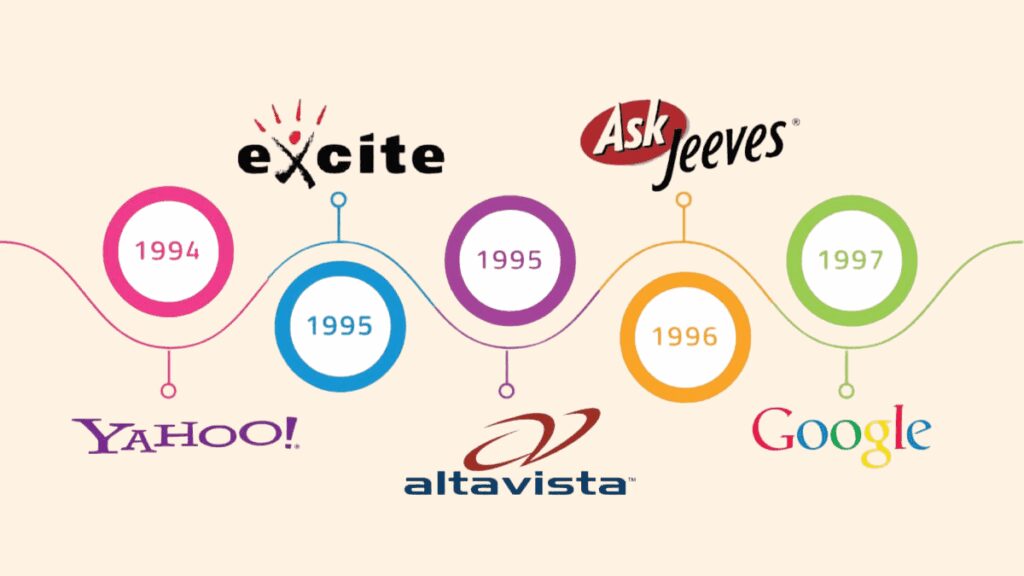
The search engine landscape transformed dramatically since the mid-1990s, with various platforms dominating different eras before Google’s eventual market leadership.
| Year | Search Engine | Significance |
|---|---|---|
| 1994 | Excite | Early web search pioneer using statistical analysis of word relationships |
| 1995 | Yahoo | Started as human-edited directory before adding search functionality |
| 1995 | AltaVista | First full-text search engine indexing millions of web pages |
| 1996 | Ask Jeeves | Natural language query processing innovation |
| 1997 | Introduced PageRank algorithm that revolutionised search quality | |
| 2009 | Bing | Microsoft’s search engine combining previous MSN and Live Search platforms |
Market Share Evolution
Early Competition (1995-2000):
Multiple search engines competed for market share, with AltaVista, Yahoo, and others providing different approaches to web search before Google’s dominance emerged.
Google’s Rise (2000-Present):
Google gradually captured dominant market share through superior algorithm quality, clean user interface, and continuous innovation, becoming synonymous with web search itself. Despite competition from Bing and other platforms, Google maintains leadership position across most global markets.
Search Engine Usage Statistics
Traffic and Transaction Patterns
E-commerce Dependency:
73% of online transactions commence through search engines, demonstrating their critical role in customer acquisition and digital commerce.
Search Volume:
Search engines process over 500 million searches daily, with this number growing substantially as internet access expands globally and mobile usage increases.
Business Impact:
70% of business traffic comes from search engine listings, indicating the commercial importance of search visibility for companies across industries.
User Search Behavior
Result Page Viewing Patterns:
| Behavior | Percentage |
|---|---|
| Users viewing only first 3 pages of results | 85% |
| Users searching past first 30 results | 52% |
| Users finding accurate, useful information | 85% |
| Users discovering new websites through search | 81% |
Search Refinement:
77% of users who don’t find accurate information use the same search engine again with different keyword combinations rather than switching platforms.
Query Complexity Patterns
Keyword Usage:
- Multiple keyword searches or phrases: 45%
- Single keyword searches: 23%
- Question-based searches: 9%
These patterns reveal how users evolved from simple single-word queries to more sophisticated multi-word searches that better express search intent.
Position and Ranking Impact
Top Position Advantage
Traffic Distribution:
The first 10 search results receive 80% more traffic than positions 11 and 12, demonstrating the dramatic advantage of first-page rankings.
Page Depth Analysis:
Most users focus on early results, with traffic dropping significantly beyond the first page of search results regardless of total results available.
User Engagement Patterns
Time on Page:
67% of online users spend 60 seconds or less on linked web documents, emphasising the importance of immediate relevance and quick value delivery.
Directory vs. Search:
56% of traffic finds information through directories, though this percentage declined substantially as search algorithms improved and directories became less prominent.
Search Engine Submission and Optimisation
Submission Methods
Manual vs. Automated:
- Manual submissions: 84% of all submissions
- Manual preference by marketers: 60% consider manual submission more effective
These statistics reflect the careful approach marketers take to search engine presence, prioritising quality over automation speed.
SEO Quality Factors
Search engines continuously develop methods to detect and penalise manipulation tactics whilst rewarding legitimate optimisation efforts.
| Approach | Description | Outcome |
|---|---|---|
| White Hat SEO | Legitimate optimisation following search engine guidelines | Sustainable rankings and traffic growth |
| Black Hat SEO | Manipulative tactics like hidden keywords and misleading meta tags | Penalties, sandboxing, or complete removal from index |
Spam Detection:
Search engines crawl sites for spam content, applying penalties or blacklisting websites that violate quality guidelines through deceptive practices.
How Search Engines Rank Content
Algorithm Fundamentals
Frequent Updates:
Search engines change algorithms regularly to maintain result quality and keep high-quality sites at optimum ranking positions whilst filtering out manipulation attempts.
Relevance Priority:
Search engines place only relevant sites in top ranking positions, with weaker sites positioned further down the ranking scale based on quality signals.
Unique Ranking Methods
Platform-Specific Approaches:
Each search engine employs its own methodology for determining website ordering and placement, though Google’s approach influences industry standards.
Page-Level Ranking:
Search engines rank individual web pages rather than entire websites, allowing multiple pages from a single site to rank for different queries.
Traffic and Authority Signals
Internal Traffic Analysis:
Search engines utilise their own traffic data to help determine which sites deserve listing prominence, measuring user engagement and satisfaction signals.
Quality Thresholds:
Only approximately 60% of search engines provide substantial business value, with major platforms like Google capturing the overwhelming majority of search traffic.
Search Query Evolution
User Search Sophistication
Descriptive Term Adoption:
Search engine users evolved to add more descriptive terms in queries, moving beyond single keywords to phrases that better express specific information needs.
Natural Language Processing:
Modern search engines process natural language queries more effectively, understanding context and intent beyond literal keyword matching.
Query Type Distribution
Search Intent Categories:
- Navigational: Finding specific websites or brands
- Informational: Seeking knowledge or answers
- Transactional: Ready to purchase or take action
- Commercial Investigation: Researching before purchasing
Understanding these categories helps businesses optimise content for different stages of the customer journey.
Search Engine Business Impact
ROI and Quality Traffic
Return on Investment:
Quality search engine listings prove beneficial for ROI, delivering targeted traffic from users actively seeking related products or services.
Client Acquisition:
Search visibility helps businesses acquire quality clients who found them through relevant queries, producing higher conversion rates than other traffic sources.
Listing Potential
Comprehensive Page Indexing:
Search engines provide potential to list every web page on a site when following correct SEO procedures, maximising visibility opportunities across multiple keywords.
Competitive Advantage:
Strong search presence provides sustainable competitive advantages, as top rankings compound over time through increased authority and user engagement.
Modern Search Engine Landscape
Current Dominant Players
Global Market Leaders:
Google maintains dominant market position globally, with Bing holding secondary position in many English-speaking markets. Regional variations exist in specific countries where local search engines like Baidu (China) or Yandex (Russia) hold significant share.
Specialised Search:
Vertical search engines focusing on specific content types (images, videos, products, news) complement general web search, providing targeted discovery options.
Technology Advancements
Artificial Intelligence Integration:
Modern search algorithms use machine learning and artificial intelligence to understand query intent, evaluate content quality, and personalise results based on user context.
Mobile-First Indexing:
Search engines prioritise mobile versions of websites, reflecting the shift toward mobile device usage for internet access and search queries.
SEO Best Practices Based on Search Statistics
Optimisation Priorities
First Page Focus:
Given that 85% of users view only the first three pages, optimisation efforts should prioritise first-page rankings for target keywords.
Content Quality:
Search engines reward sites providing accurate, useful information that satisfies user intent rather than those gaming ranking systems.
Technical Requirements
Crawlability and Indexing:
Ensure search engines easily crawl and index all important pages through proper technical structure, sitemap submission, and internal linking.
Speed and Performance:
Fast-loading pages improve user experience and search rankings, as 67% of users spend 60 seconds or less on visited pages.
Common Search Engine Myths
Misconception vs. Reality
| Myth | Reality |
|---|---|
| Search engines rank entire websites | Search engines rank individual web pages based on query relevance |
| All search engines provide equal business value | Approximately 60% of search engines generate meaningful business traffic |
| Automated submission works better | 60% of marketers find manual submission more effective for quality control |
| Tricks and shortcuts improve rankings | Black hat tactics result in penalties and removal from search indexes |
Understanding Penalties
Sandbox Effect:
Sites violating search engine guidelines face sandboxing (temporary penalty reducing visibility) or permanent blacklisting depending on violation severity.
Recovery Process:
Recovering from penalties requires identifying violations, removing problematic content, and submitting reconsideration requests whilst demonstrating compliance commitment.
Historical Context and Learning
Search Engine Evolution
From Simple to Sophisticated:
Early search engines like AltaVista relied primarily on keyword matching, whilst modern platforms like Google use hundreds of ranking factors including semantic understanding and user engagement metrics.
Directory to Algorithm:
Platforms like Yahoo started as human-edited directories before transitioning to algorithmic search, reflecting the evolution from manual curation to automated relevance determination.
Lessons for Modern Marketing
Quality Over Manipulation:
The consistent pattern across search engine evolution shows quality content and legitimate optimisation always prevail over manipulation tactics.
User Focus:
Search engines continuously improve at understanding and satisfying user intent, making user-focused content strategies the most sustainable approach.
Measuring Search Success
Key Performance Indicators
Traffic Metrics:
- Organic search traffic volume
- Keyword ranking positions
- Click-through rates from search results
- Bounce rates and time on site
Conversion Metrics:
- Lead generation from organic search
- Sales attributed to search traffic
- Cost per acquisition from search
- Return on investment from SEO efforts
Competitive Analysis
Market Position:
Track ranking positions for target keywords relative to competitors, identifying opportunities where improved optimisation could capture additional market share.
Gap Analysis:
Identify keywords where competitors rank but your site doesn’t, revealing content opportunities and optimisation priorities.
Future of Search Technology
Emerging Trends
Voice Search Growth:
Voice-activated searches through smart devices require optimization for natural language queries and conversational search patterns.
Visual Search:
Image-based search capabilities expand beyond traditional text queries, requiring businesses to optimise visual content for discoverability.
AI-Powered Answers:
Search engines increasingly provide direct answers within results pages rather than just links, requiring content optimization for featured snippets and answer boxes.
Preparing for Evolution
Adaptive Strategies:
Successful long-term SEO requires monitoring search engine updates, adapting to algorithm changes, and maintaining focus on user value over ranking manipulation.
Multi-Platform Presence:
Diversifying across multiple search platforms and discovery channels reduces dependency on single traffic sources whilst maximising overall visibility.
Practical Application for Businesses
Getting Started with Search Optimization
Foundation Steps:
- Conduct keyword research identifying terms your target audience searches
- Create quality content addressing user search intent
- Implement technical SEO ensuring proper crawling and indexing
- Build authority through quality backlinks and brand signals
- Monitor performance and refine strategies based on results
Realistic Expectations:
Search optimization delivers results over months rather than days, requiring consistent effort and patience whilst algorithms evaluate site quality and authority.
When to Seek Professional Help
Complexity Indicators:
Consider professional SEO services when:
- Technical issues prevent proper indexing
- Rankings decline despite optimization efforts
- Competition dominates all target keywords
- Resource constraints limit internal optimization capacity
Choosing Providers:
Select SEO providers demonstrating white hat practices, transparent reporting, and realistic timelines rather than those promising guaranteed rankings or quick results.
Related Search Engine Resources
Historical Context
Learn more about specific search engines that shaped the industry:
- AltaVista History and Innovation – The pioneering full-text search engine
- Yahoo Evolution and Impact – From directory to search giant
- Google’s Search Dominance – How PageRank changed everything
- Bing’s Market Position – Microsoft’s search engine evolution
Conclusion
Search engine statistics reveal patterns that inform effective digital marketing strategies. Understanding user behavior, ranking factors, and platform evolution helps businesses optimise their online presence for sustainable growth.
The data shows clear patterns: users focus on top results, search quality matters more than manipulation tactics, and search engines continuously improve at understanding user intent. Businesses succeeding in search prioritise user value, technical excellence, and content quality over shortcuts and tricks.
Whether examining historical statistics or current trends, the fundamental principle remains consistent: search engines reward sites providing genuine value to users whilst penalising those attempting to game the system. This understanding forms the foundation of effective search marketing strategies that deliver long-term results.
The evolution from early platforms like AltaVista and Yahoo to Google’s current dominance, with competitors like Bing maintaining secondary positions, demonstrates how superior technology and user focus ultimately determine success in the search engine market. For businesses, this history emphasises the importance of adapting to search evolution whilst maintaining focus on serving user needs through quality content and optimised experiences.