

Ethical SEO vs Unethical SEO: How to Tell If Your Agency Is About to Get You Penalised
Rankings and traffic are great. If that traffic never turns into paying clients, you are burning your budget.
And there are two ways to get those rankings. Ethical SEO earns them. Unethical SEO fakes them, and hands you the bill later.
Worse, some of the shortcuts used to get those rankings will get your website removed from Google altogether.
This guide shows you the difference between ethical SEO and unethical SEO, how to check your own site in fifteen minutes, and the six questions that expose an agency cutting corners on your domain.
We’re Optimus Agency, ranked the top recommended lead generation agency in South Africa on GoodFirms, an independent research and review platform. We’ve been building search and lead generation systems for service businesses since 2012.
Worried your current agency is using unethical SEO on your site?
On a free 30-minute assessment we check your backlink profile, your on-page setup and your content for the techniques listed further down this page, check for the unethical SEO techniques listed further down this page, then show you where your rankings and your enquiries are leaking.
You leave with that whether you work with us or not.
Darryn and Cassie run these calls personally, so we take on a limited number of new clients each month.
Ethical SEO vs Unethical SEO: Key Takeaways
- Ethical SEO earns rankings.
- Unethical SEO fakes them.
- You carry the penalty, not them.
- Reviews are the easiest win.
- Steady beats spiky, every time.
- Rankings without replies lose.
Why Ethical SEO Matters More Than the Rankings Themselves
Ethical SEO is how businesses get found by people already looking for what they sell. Done properly, ethical SEO delivers enquiries month after month without paying for every click.
Unethical SEO does something far worse than nothing.
Search engines publish guidelines. Break them and your site gets demoted, deindexed, or removed from results completely. Recovering from a manual penalty takes months of cleanup work, and some sites never fully recover.
Here is the part most business owners miss about unethical SEO. The agency does not carry that risk. You do.
They move on to the next client. You are left with a domain nobody can find, a business that has lost its main source of enquiries, and a cleanup bill.
The uncomfortable question. If your rankings jumped unusually fast, or your agency will not explain exactly what they did to achieve them, you are entitled to ask why. A good agency welcomes that question.
What Is Ethical SEO?
Ethical SEO is usually called “white hat”. Ethical SEO describes techniques that follow the published guidelines of search engines and improve the experience for the person visiting your site.
The simplest test for ethical SEO: would you be comfortable if a customer saw exactly what you did?
Ethical SEO is visible.
There is nothing hidden from the visitor, because nothing needs hiding. The work improves the site for real people, and search engines reward that as a side effect.
Ethical SEO takes longer.
Ethical SEO also survives algorithm updates, because it is not built on a loophole waiting to be closed.
Ethical SEO Practices
These ethical SEO techniques follow the rules and hold their value over time. Every one of them is worth doing whether or not search engines existed.
- A separate, properly optimised page for each service you offer, rather than one page trying to rank for everything.
- Content written for the person searching, answering the question they typed.
- Sensible internal linking between related pages on your own site, so both visitors and search engines find everything.
- Regular publishing of genuinely useful material: guides, case studies, answers to the questions customers ask you every week.
- Ongoing keyword research, so your content matches how your customers describe their problem rather than how your industry describes it.
- Links earned from relevant, credible sites, through work worth linking to.
- A clean sitemap and technical setup, so search engines index your site correctly.
- Fast loading and proper mobile handling, because most local service searches happen on a phone.
- Consistent, genuine review collection, which is now among the strongest local ranking signals available.
The Simplest Ethical SEO There Is, and Almost Nobody Does It
Every ethical SEO practice on that list takes skill, time or budget. One takes none of them.
Ask every happy customer for a review. Every time. Forever.
That is it. No technical work, no agency, no spend. Review volume and recency sit among the strongest local ranking signals Google uses, which makes this the cheapest ethical SEO available to any business.
So why does almost nobody do it?
The Fear That Stops the Simplest Ethical SEO of All
The job went fine. The customer paid, said thanks, and left happy.
And you didn’t ask for a review.
Because somewhere at the back of your mind sits a thought you have never said out loud: what if I ask, and they stop to think about it properly, and remember the one thing that annoyed them?
Right now you have a quiet, satisfied customer. Asking feels like poking it.
That fear is rational. It is also the most expensive habit in your business, because the competitor down the road is asking. The person comparing you both online has no idea your work is better. They see who has forty reviews and who has four.
The Second Fear: Feeling Like You’re Begging
Asking for a review feels like asking for a favour, and for a lot of South African business owners that sits somewhere between awkward and undignified.
You did good work. Having to then ask the customer to say so out loud feels like it cheapens it.
So the ask gets softened into something nobody acts on. “If you get a chance, a review would be great.” They mean it when they say yes. They have forgotten by the time they reach the car.
Then the Dopamine Wears Off
Here is the pattern we see constantly.
A business owner decides reviews matter. They ask three customers that week. All three deliver. The profile goes from six reviews to nine, the stars look strong, and it feels brilliant.
Then a busy fortnight arrives. A geyser bursts, a staff member resigns, a client goes quiet on an invoice. Asking for reviews drops off a list it was never properly on.
Six weeks later the profile has not moved.
Nothing visibly breaks, so nobody notices. Google notices. Recency is a signal, and a burst followed by silence reads as a business that was briefly active and then went quiet.
Steady beats spiky, every time.
Three reviews a week for a year will do more for your rankings than thirty reviews in one month and nothing afterwards.
Why It Never Sticks When It Depends on You Remembering
The moment a customer is most likely to leave a review is the moment the job finishes and they are happiest.
That is also the exact moment you are packing up, driving to the next job, or three messages behind. Nobody is at their most organised at the end of a job.
Any process that depends on you remembering, at your busiest, to do the thing that feels awkward, will fail. Not through a lack of discipline on your part. Through a design that needed discipline it should never have needed.
What We Built to Make Ethical SEO Automatic
MomentumX Lite takes the whole thing off you.
- The ask goes out automatically after every completed job. Nothing to remember.
- Three emojis, not a form. Two seconds of the customer’s time, which is why people answer.
- Negative feedback never reaches Google. It routes privately to you so you can fix it with that customer directly.
- Positive feedback posts automatically, and simultaneously, to Google, your website and your social channels.
- Every review gets a reply within hours, which is its own ranking signal and something almost no competitor bothers with.
Your fear was never irrational. You were right that asking blind carries a risk.
The answer was never to stop asking. The answer is to stop asking blind. When unhappy feedback comes to you privately and happy feedback goes public on its own, the worst outcome of asking becomes a private message telling you something you needed to hear anyway.
See how to collect reviews consistently without asking anyone face to face →
Why Ethical SEO Moves Rankings Now
That is not a small tactic bolted onto the side of ethical SEO. It is close to the centre of it now.
Keyword density and backlinks still matter, but the signal search engines reward most has shifted, and it is much simpler than the old checklist.
Is this business genuinely active, and are real customers talking about it right now?
That is why consistent, genuine review collection outperforms most technical tinkering. Review volume and recency are among the strongest local ranking signals available, and they cost nothing beyond asking.
Here is how that works in practice.
After a completed job/appointment, the customer gets a short message asking how it went, answered on a three-emoji scale rather than a full review form. Negative feedback routes privately to the owner so the problem gets fixed. Positive feedback posts automatically, and simultaneously, to Google, the website and social channels.
Several platforms updating with fresh, genuine content at the same time sends a far stronger signal than any single optimised page.
Real result: Bespoke Beauty, a salon on Cape Town’s Atlantic Seaboard, one of the most competitive beauty markets in the city, opened on 25 May 2026. Within two months it ranked first for “beauty salon” and “beauty salon Sea Point”, ahead of competitors who had traded on the same street for over a decade.
The business averages roughly three new reviews a day, holds a perfect five-star rating, and every review gets a reply within hours.
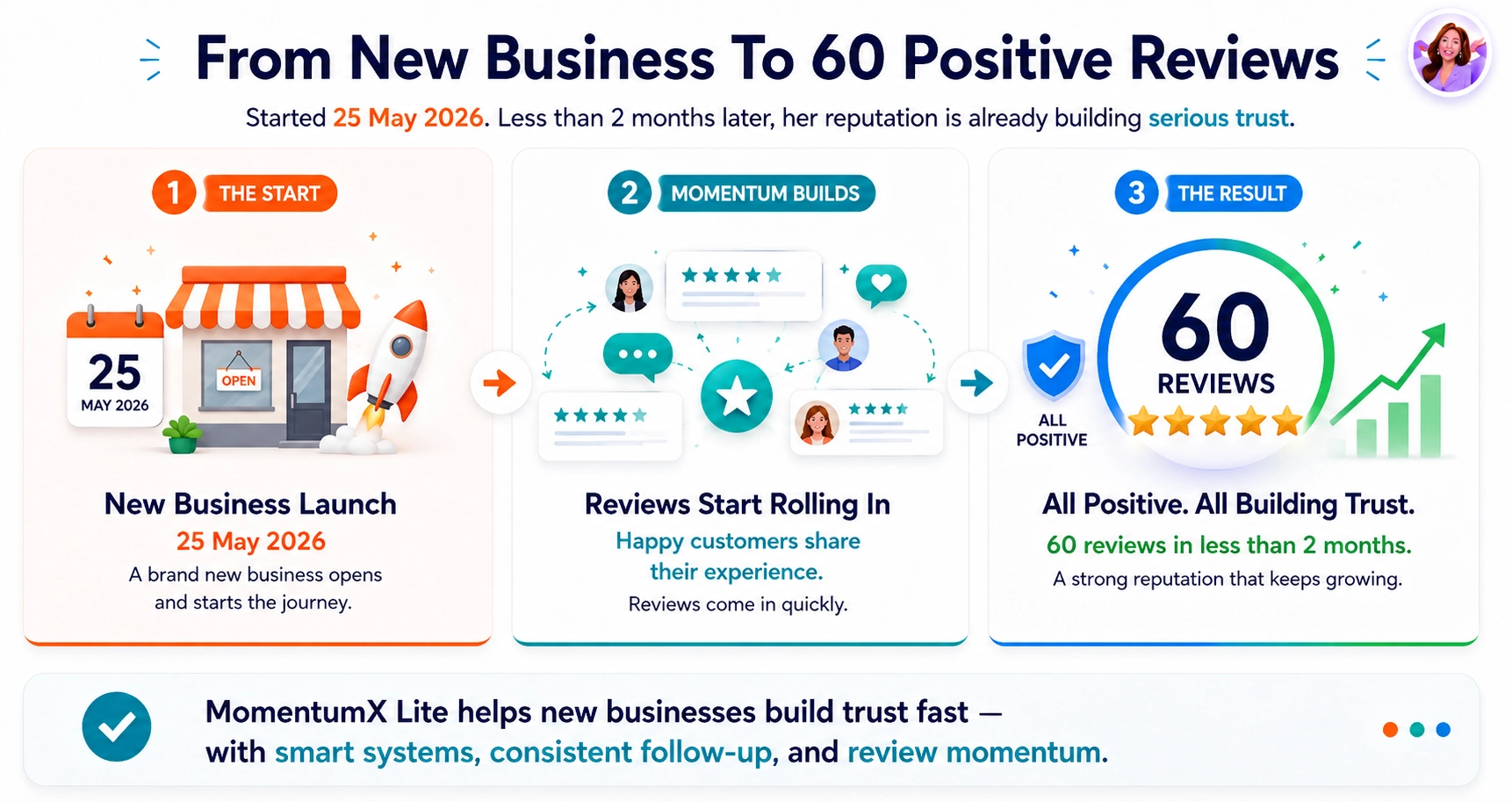
No hidden text. No bought links. No doorway pages. Ethical SEO and one business that looks unmistakably alive to anyone checking, human or algorithm.
See how the review and follow-up system works.
Ethical SEO Gets You Found. It Does Not Close the Lead.
Here is the part most SEO guides skip entirely.
You rank first. Somebody searches, finds you, and sends an enquiry at 8pm on a Saturday. Nobody replies until Monday afternoon. They have already gone with a competitor.
The ranking was perfect. The revenue went elsewhere.
Harvard Business Review audited 2,241 companies and found an average first-response time of 42 hours, with 23% never replying at all. Research by Dr James Oldroyd at MIT found that replying within five minutes rather than thirty improved the odds of qualifying a lead by 21 times. Drift found only 7% of businesses reply within five minutes.
Ethical SEO gets you found. It does not answer the phone.
Ranking first and replying second is an expensive combination. Whatever you invest in search, the system behind it decides how much of that traffic turns into revenue.
Answer every enquiry within seconds, day or night, or have your traffic and your follow-up built and managed together.
Ethical SEO Results From South African Service Businesses
Ethical SEO, measurable outcomes.
Trailers Unlimited
Roughly 12 to 15 leads a month, rising to roughly 150 to 175 qualified leads a month within 90 days, at a significantly lower cost per lead.
★★★★★
“MomentumX Lite made us so busy at times that we’ve had to scale back our campaigns. The mobile app is so easy to use and the best part is we have a team behind us who cares.”
Trailers Unlimited
Rayleen Badenhorst
NMC Orthodontics
R1.5 million in new revenue, 1,431 qualified leads and 117 booked consultations, at a reported 10.5% conversion rate.
Body Sculpt On The Go
R1.5 million in revenue and 374 new clients across roughly five and a half months.
★★★★★
“This has genuinely been life-changing for my landscaping business. No matter what curveball I throw their way, they are always there to help. I highly recommend MomentumX Lite.”
Gardens By Louise
Louise Crwys-Williams
What Is Unethical SEO?
Unethical SEO is usually called “black hat”, or spam. Whatever you call it, unethical SEO has one purpose.
Unethical SEO is not illegal. It is manipulative. Every unethical SEO technique exists to make a site look more relevant or more popular to a search engine than it genuinely is.
The goal of unethical SEO is always the same: fast rankings, right now, with no regard for what happens in six months.
Unethical SEO is almost never obvious to a visitor, which is exactly the point. Unethical SEO techniques are built to be seen by machines and hidden from people.
A quick way to spot unethical SEO. Look at where a site’s backlinks come from. Hundreds of links from unrelated directories, foreign-language blogs or sites nobody has heard of is the clearest sign somebody bought links rather than earning them.
Unethical SEO Practices
These unethical SEO techniques break published guidelines. Any agency running unethical SEO on your site is gambling with your domain.
Hidden text. White text on a white background, text behind images, or font sizes set to zero. Written for crawlers, invisible to customers.
Hidden links. Links coloured to match the surrounding text so a visitor never notices them.
Keyword stuffing. The same phrase repeated far past the point of readability. Visitors notice, and so does Google.
Cloaking. Showing search engines one version of a page and human visitors another.
Sneaky redirects. Sending a visitor to a page different from the one that ranked.
Duplicate content. The same text copied across multiple pages or lifted from another site.
Auto-generated content. Bulk pages written by a machine with no editing, no expertise and no purpose beyond hitting a keyword. This is the fastest-growing form of unethical SEO right now.
Bought and traded links. Paying for backlinks, or swapping links with unrelated sites purely to inflate numbers.
Doorway pages. Dozens of near-identical pages built to catch location searches, all funnelling to the same place.
Automated queries. Scraping search results at scale without permission.
Fake reviews. Written by people who were never customers. This one damages trust as badly as it damages rankings.
If you recognise any of this unethical SEO on your own site, deal with it before the next algorithm update deals with it for you.
Check Your Own Site for Unethical SEO in Fifteen Minutes
You do not need an agency to check for unethical SEO. Run these six tests yourself today.
Test 1: Highlight the page. Open your homepage, press Ctrl+A (or Cmd+A) to select everything. Hidden text appears as highlighted blocks where you thought there was nothing.
Test 2: Read your own copy aloud. If a phrase repeats so often it sounds broken, that is keyword stuffing, and it is costing you conversions as well as rankings.
Test 3: Check your backlinks. Open Google Search Console, then Links. Look at the sites linking to you. Unfamiliar names, foreign-language domains and unrelated directories are red flags.
Test 4: Search a sentence from your own site. Copy a full sentence from a service page, paste it into Google in quote marks. If it appears on other sites, your content is duplicated.
Test 5: Count your location pages. If your agency built forty near-identical pages for forty suburbs, those are doorway pages.
Test 6: Check your reviews. When did the last genuine review arrive? Older than a month means your strongest free ranking signal has gone stale.
Six Questions That Expose Unethical SEO in Any Agency
Plenty of agencies do excellent, honest work. Unethical SEO usually shows itself in the first conversation, so here is what to ask.
1. Where do your backlinks come from? A straight answer names real sites and explains why each one linked. A vague answer about “our network” means bought links.
2. Who writes the content? Ask to see a sample and ask who edited it. Bulk auto-generated pages are the most common unethical SEO shortcut, and the fastest route to a penalty.
3. How fast will I rank? Anyone guaranteeing page one in thirty days for a competitive term is either running unethical SEO or targeting terms nobody searches.
4. What happens to the work if I leave? Your content, your domain, your Google Business Profile and your backlinks belong to you. Confirm that in writing.
5. How do you measure success? Rankings and traffic are inputs. Ask how they measure enquiries, qualified leads and revenue.
6. Would you be comfortable if my customers saw exactly what you did? The single most useful question on this list. Watch how quickly it gets answered.
Run those six past any agency, including us. Ethical SEO has nothing to hide, so the answers should come back quickly and specifically.
Found something you’re unsure about?
We’ll go through your backlink profile, your content and your on-page setup with you and tell you straight whether it’s unethical SEO or nothing to worry about. Book a free 30-minute assessment →
Frequently Asked Questions About Ethical SEO
What is ethical SEO?
Ethical SEO, or white hat SEO, means improving your site using techniques that follow published search engine guidelines and genuinely help the person visiting. With ethical SEO, nothing is hidden from the visitor.
What is unethical SEO?
Unethical SEO, or black hat SEO, means manipulating search engines with techniques like hidden text, bought links, cloaking and auto-generated content. Unethical SEO produces fast results and long-term damage.
Is unethical SEO illegal?
No. It breaks search engine guidelines rather than any law. The penalty is commercial: demotion, deindexing, or removal from search results entirely.
How do I know if my agency is using unethical SEO on my site?
Run the six checks above, then ask the six questions. The clearest warning signs are unexplained ranking jumps, a backlink profile full of unfamiliar sites, and an agency unwilling to explain exactly what they did.
Can a site recover from a Google penalty?
Usually, but it takes time. Recovery from unethical SEO means removing or disavowing the bad links, deleting the offending content, and submitting a reconsideration request. Expect months rather than weeks.
How long does ethical SEO take to work?
Ethical SEO is slower by design. Low-competition and location-specific terms often start moving within three months. Competitive single-word terms take far longer, and some are never worth chasing. Any agency promising fast wins on a competitive term is telling you something about their methods.
What if asking for reviews gets me a bad one?
That fear is why most businesses never ask consistently. The fix is a sentiment check before anything goes public. A customer answers a quick three-emoji prompt, negative responses route privately to you so you can resolve them, and positive responses post to Google automatically. You keep the upside and handle the downside in private.
How often should I be asking for reviews?
After every completed job, indefinitely. Recency counts as much as volume, so a steady trickle beats an occasional burst. This is also why automation matters more here than almost anywhere else: the ask has to happen when you are busiest.
Do reviews affect rankings?
Yes. Review volume and recency are among the strongest local ranking signals, and they influence whether someone clicks you over a competitor once you rank. Both effects compound.
Is SEO better than Google Ads?
They solve different problems. Google Ads generates enquiries today and stops when you stop paying. SEO builds visibility that keeps working, but takes months to establish. Most of our clients run both.
Worried About Unethical SEO on Your Site? Talk to Us
The internet is crowded and every competitor you have is fighting for the same positions. That pressure is exactly why some agencies fall back on unethical SEO, and why the businesses that win are the ones doing ethical SEO properly and answering fast when the enquiry arrives.
If you want a straight answer about your own site, we’re easy to reach.
Book a free 30-minute assessment →
Bring your domain and whatever is worrying you. We’ll check your backlink profile, your content and your on-page setup for unethical SEO, then show you where your rankings and your enquiries are leaking. You leave with that whether you work with us or not.
Darryn and Cassie run these calls personally, so we take on a limited number of new clients each month.
Happier to message? WhatsApp or send a voice note to +27 81 637 9143 and we’ll come back to you.
Interested in search, Google Ads and follow-up built as one system? Start there.